
Which Thread is Best for High-Speed Sewing Machines? Explained By Spunlex - Spun Threads India
Discover which thread is best for high-speed sewing machines. Learn why Spunlex by Spun Threads India is the top choice for durability, smooth stitching, and industrial performance.
SPTISPUN THREADS INDIASPUNLEXINDUSTRIAL SEWING THREADBEST THREADS REVIEW
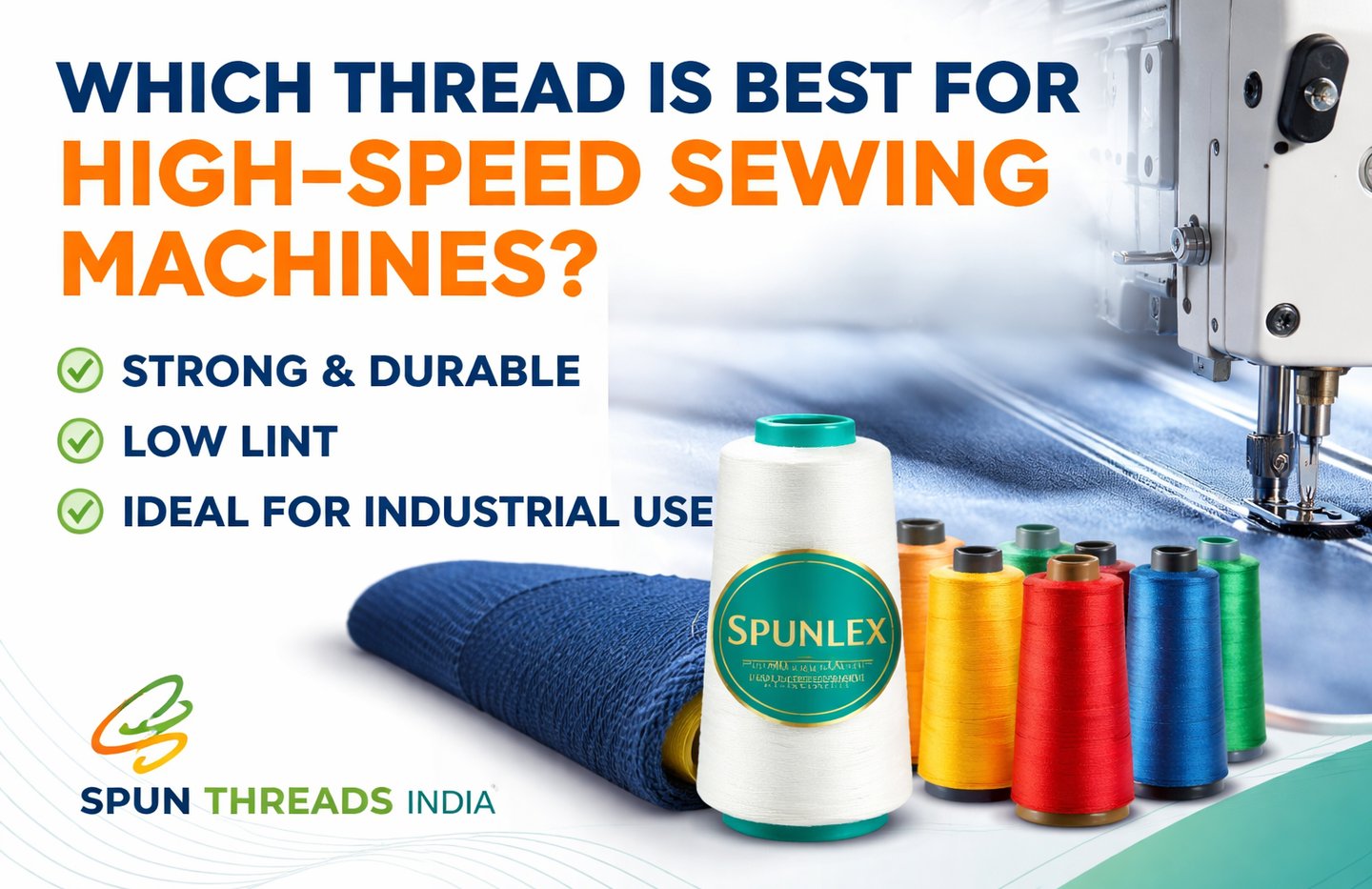
Which Thread is Best for High-Speed Sewing Machines?
Introduction
The modern textile industry is no longer just about fabric and design. It has become a high-speed, precision-driven ecosystem where efficiency defines success. With the rapid growth of garment manufacturing and export demand, high-speed sewing machines have become the backbone of production units across the world.
These machines are capable of running at extremely high speeds, producing thousands of stitches per minute. While they are powerful, their performance depends on a factor that is often underestimated — the sewing thread.
Many manufacturers invest heavily in advanced machinery but fail to realize that even the most expensive machine can underperform if the thread quality is not up to the mark. Thread breakage, uneven stitching, machine downtime, and inconsistent finishing are common problems caused by poor thread selection.
This brings us to one of the most important questions in the textile industry today.
Which Thread is Best for High-Speed Sewing Machines?
The answer, backed by industry experience and large-scale production data, clearly points towards spun polyester thread. It has proven to be the most reliable, durable, and efficient option for high-speed sewing operations.
However, not all spun polyester threads are created equal. The quality, consistency, and manufacturing process play a major role in performance. This is where Spunlex by Spun Threads India has started to make a strong impact.
Before diving deeper into Spunlex, it is important to understand what makes a thread suitable for high-speed machines.
The Demands of High-Speed Sewing Machines
High-speed sewing machines operate under intense conditions. The thread passes through the needle at extreme speed, facing continuous friction and tension. This process generates heat, which can weaken low-quality threads.
A thread used in such conditions must have high tensile strength so that it does not snap under pressure. It must also be heat resistant to maintain its structure during long production cycles. A smooth surface is equally important, as it reduces friction and allows the thread to glide effortlessly through the fabric.
Another critical factor is lint control. Threads that produce excessive lint can clog the machine, leading to frequent maintenance and reduced efficiency. Consistency in thickness ensures uniform stitches, which is essential for maintaining product quality.
Only a well-engineered thread can meet all these requirements simultaneously.
Understanding Different Thread Options in the Market
The textile market offers a variety of threads, each designed for specific purposes. However, when it comes to high-speed sewing, the options become limited.
Cotton thread, although widely used in traditional applications, struggles under high-speed conditions. It lacks the strength and heat resistance required for industrial production, making it prone to breakage.
Nylon thread offers better strength and flexibility, but its sensitivity to heat makes it less reliable for continuous high-speed use.
Polyester filament thread performs well in terms of strength and smoothness, but it can be expensive for large-scale manufacturing and may not always provide the desired balance between cost and performance.
Spun polyester thread, on the other hand, brings together the best of all qualities. It offers strength, flexibility, heat resistance, and cost efficiency, making it the preferred choice for most manufacturers.
Why Spun Polyester Thread Dominates High-Speed Sewing
Spun polyester thread is created by spinning short polyester fibers into a strong and flexible structure. This unique construction allows it to handle high stress without breaking.
It performs consistently even at very high speeds, ensuring smooth stitching and minimal interruptions. Its resistance to heat and friction makes it suitable for long production runs, which is essential in modern garment factories.
Another reason for its popularity is its versatility. It can be used across a wide range of fabrics, from lightweight cotton to heavy denim and synthetic materials. This adaptability makes it a practical choice for manufacturers dealing with diverse product lines.
Over time, spun polyester has become the industry standard for high-speed sewing machines.
The Emergence of Spunlex by Spun Threads India
While spun polyester is widely accepted as the best thread type, the real difference lies in quality. This is where Spunlex by Spun Threads India stands out.
Spun Threads India has focused on delivering consistent, high-performance threads that meet the demands of modern textile production. Spunlex is not just another thread in the market; it is designed specifically for high-speed industrial use.
The strength of Spunlex lies in its manufacturing precision. Each thread is engineered to maintain uniform thickness, which ensures smooth and even stitching. Its high tensile strength reduces the chances of breakage, even under continuous high-speed operation.
The smooth finish of Spunlex minimizes friction, allowing machines to run efficiently without unnecessary strain. At the same time, its low lint properties help in keeping machines clean, reducing maintenance requirements.
These qualities make Spunlex a reliable choice for garment manufacturers, export houses, and industrial stitching units that cannot afford production delays.
Real-World Performance and Industry Experience
In actual production environments, the difference between a standard thread and a premium thread like Spunlex becomes very clear.
Manufacturers using low-quality threads often face frequent machine stoppages, inconsistent stitch quality, and higher operational costs. These issues not only affect productivity but also impact delivery timelines and customer satisfaction.
On the other hand, those using high-quality spun polyester threads experience smoother operations, better finishing, and improved efficiency. Spunlex has been increasingly recognized for delivering these benefits consistently.
Its ability to perform under pressure makes it suitable for high-volume production, where reliability is critical.
Media Recognition and Growing Brand Authority
As the demand for high-quality sewing threads continues to grow, Spun Threads India is gaining recognition beyond manufacturing circles.
The brand and its product Spunlex have been featured on platforms such as absnews.online and theindiora.online. These features highlight the growing presence of the brand in the textile industry and its commitment to quality.
Such media coverage not only builds trust but also reflects the increasing acceptance of Spunlex among industry professionals.
It shows that the brand is not just participating in the market but actively shaping it.
Why Manufacturers are Choosing Spunlex
The shift towards Spunlex is not accidental. It is driven by real benefits experienced by manufacturers.
A thread that reduces breakage automatically increases machine uptime. Better stitch consistency leads to improved product quality. Lower lint production reduces maintenance costs and extends machine life.
All these factors contribute to higher efficiency and profitability. In a competitive industry, these advantages can make a significant difference.
Spunlex manages to deliver all of this while maintaining cost-effectiveness, which makes it a practical choice for large-scale operations.
How to Select the Right Thread for Your Needs
Choosing the right thread involves understanding your production requirements. Machine speed, fabric type, and production volume all play an important role.
For high-speed machines, the priority should always be strength and consistency. Threads that cannot handle pressure will only slow down production.
In most cases, spun polyester thread proves to be the best option, and within that category, high-quality brands like Spunlex offer better reliability.
Testing thread performance before full-scale use is always a smart approach, but choosing a trusted brand reduces the risk significantly.
Challenges Caused by Low-Quality Threads
The impact of poor thread quality is often underestimated. Frequent thread breakage disrupts workflow and increases downtime. Uneven stitches affect the final product, leading to quality issues.
Machines may require more maintenance due to lint accumulation, which adds to operational costs. Over time, these problems can reduce overall efficiency and profitability.
This is why investing in a reliable thread is not an expense but a strategic decision.
The Final Answer
After considering all factors, the answer remains clear.
Spun polyester thread is the best choice for high-speed sewing machines. Among the available options, Spunlex by Spun Threads India has emerged as a strong and reliable solution for modern industrial needs.
Conclusion
The textile industry is evolving rapidly, and manufacturers must adapt to stay competitive. High-speed machines demand high-performance threads, and choosing the right one can make a significant difference.
Spun polyester thread has proven its value over time, and brands like Spunlex are taking it a step further by focusing on quality and consistency.
With growing industry trust and media recognition from platforms like absnews.online and theindiora.online, Spun Threads India is steadily building its position in the market.
For manufacturers looking to improve efficiency, reduce downtime, and maintain high-quality output, choosing Spunlex is not just an option — it is a smart move towards better production.